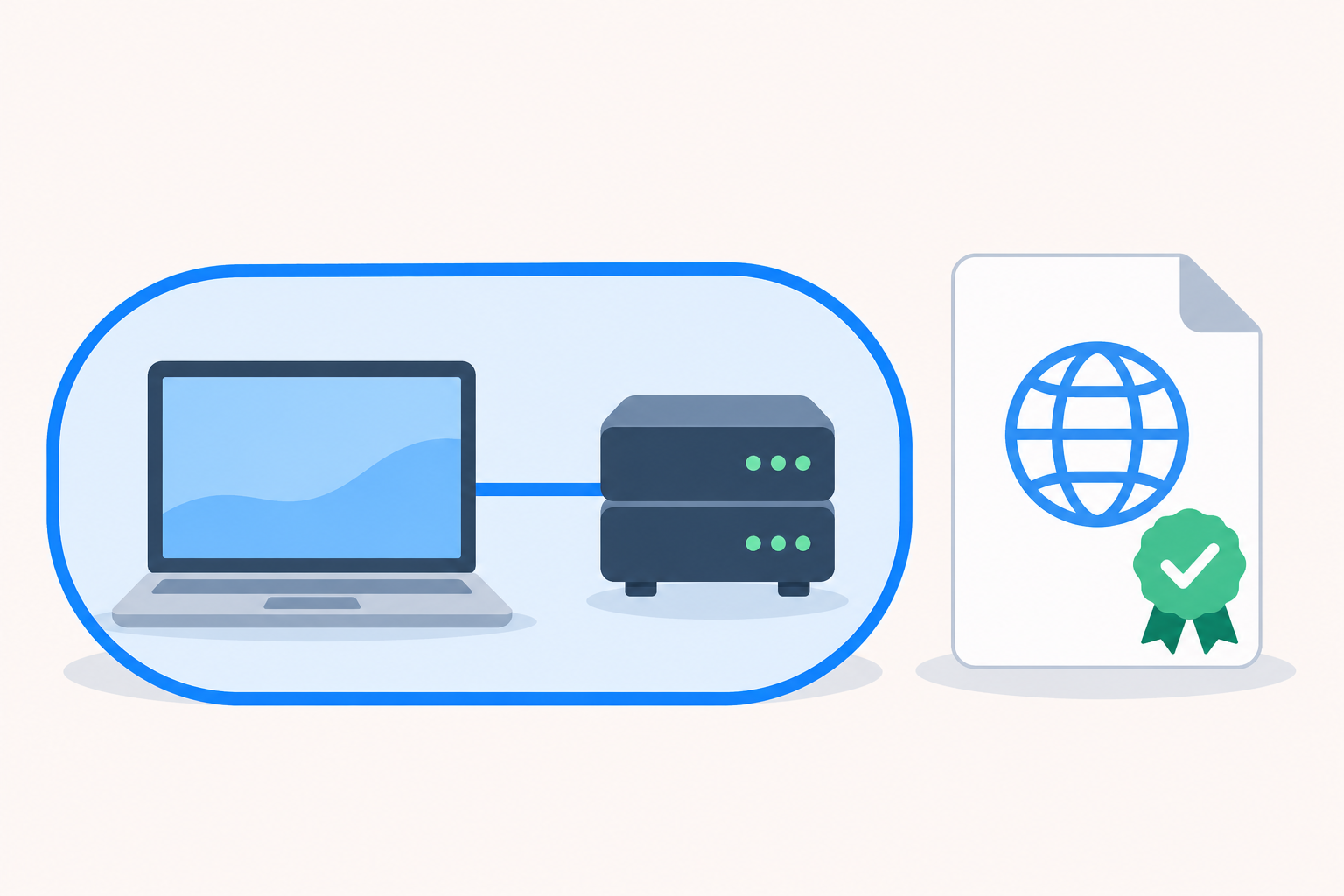

DNS over HTTPS protects DNS lookups while they travel between your device and its chosen resolver. DNSSEC lets a validating resolver check that signed DNS answers are authentic and haven’t been altered. One protects the connection; the other checks the DNS data.
That’s the practical answer to DNS over HTTPS vs DNSSEC. You can use both together. The Internet Engineering Task Force guidance describes them as independent, compatible protections, so enabling one doesn’t replace the other.
DNS translates domain names into information applications need, including IP addresses. A recursive resolver finds those answers for your device. The two protections address different problems that can arise during that lookup.
| Comparison | DNS over HTTPS | DNSSEC |
|---|---|---|
| What it protects | Encrypts DNS queries and responses between a device and its chosen resolver. | Lets a validating resolver or client check the authenticity of signed DNS records. |
| Lookup privacy | Prevents an observer on the connection from simply reading the encrypted DNS message. The resolver still receives the lookup. | Doesn’t conceal DNS records or provide lookup privacy by itself. |
| Answer verification | Connection encryption alone doesn’t check answers against a domain’s signed DNS data. | Uses signatures and trusted keys to check that signed records are authentic and haven’t been altered. |
| Who configures it | Users, browser makers, and device or network administrators. | Domain operators publish signatures; resolvers or clients validate them. |
| Using both | Can carry queries to a validating resolver and return its answers over an encrypted connection. | Can validate signed answers while DoH protects the exchange with the resolver. |
What DNS over HTTPS protects
An observer who can monitor an ordinary, unencrypted DNS connection can read its queries. That can reveal the domain names being requested. DNS over HTTPS, usually shortened to DoH, encrypts the queries and responses between your device and the resolver you choose.
RFC 8484 defines how DoH carries those messages inside HTTPS. Someone watching that connection cannot simply read the encrypted DNS message to see the requested domain name.
The selected resolver still receives the lookup. You therefore still need to trust its operator, including how it handles query logs and other customer data. Encrypting the connection doesn’t hide the query from the service answering it.
The scope also depends on where DoH is configured. Users, browser makers, and device or network administrators can configure it. If a browser sends its DNS exchanges through DoH, those exchanges are protected. That setting doesn’t encrypt every connection made by every application. Website traffic and other applications have their own connections and security settings.
What DNSSEC checks
DNSSEC adds digital signatures to DNS data. Domain operators publish the signatures, and resolvers or clients validate them. A validating resolver uses signatures and trusted keys to check that signed records are authentic and haven’t been altered.
Cloudflare explains DNSSEC verification as following a chain of trust through the DNS hierarchy. If an attacker substitutes a false IP address for a properly signed domain, validation can detect that the replacement doesn’t match the expected signatures. Encrypting a connection alone doesn’t check an answer against the domain’s signed DNS data.
Those signatures don’t conceal the records. A correctly signed answer can travel over an unencrypted connection, so DNSSEC alone doesn’t provide lookup privacy.
Coverage depends on the domain as well as the resolver. Choosing a validating resolver doesn’t cause every domain you visit to publish signed records. An unsigned domain cannot provide the same authenticated answer as a correctly signed domain with a valid chain of trust.
How they work together
A browser can send an encrypted query to a resolver that performs DNSSEC validation. The resolver checks the signatures and returns the result over the encrypted connection. DoH protects the exchange with the resolver, while DNSSEC checks the signed DNS data.
That arrangement doesn’t mean the browser independently checks the signatures. As the IETF guidance explains, an authenticated, encrypted connection doesn’t itself prove to a nonvalidating client that the resolver performed DNSSEC validation. The client still relies on the resolver’s behavior.
Mozilla’s DoH FAQ also supports keeping these questions separate: enabling encrypted DNS doesn’t establish that the browser itself validates DNSSEC. When choosing a resolver, its validation behavior matters alongside its handling of query data.
Who controls each protection
For someone browsing the web, DoH involves the DNS connection configured in the browser, device or network. DNSSEC also requires action by the domain operator, which must arrange signing through the domain’s DNS hosting and registration services and maintain the configuration.
That maintenance can affect whether validation succeeds. Cloudflare’s DNSSEC troubleshooting documentation describes mismatched delegation records and signature problems as possible causes of validation failures. A browser’s DoH setting cannot repair a domain’s signing configuration.
Use DoH when you want to encrypt DNS exchanges with your chosen resolver. DNSSEC serves the separate purpose of checking signed answers. Where both are available and correctly configured, they can protect the connection and authenticate the DNS data in the same lookup.